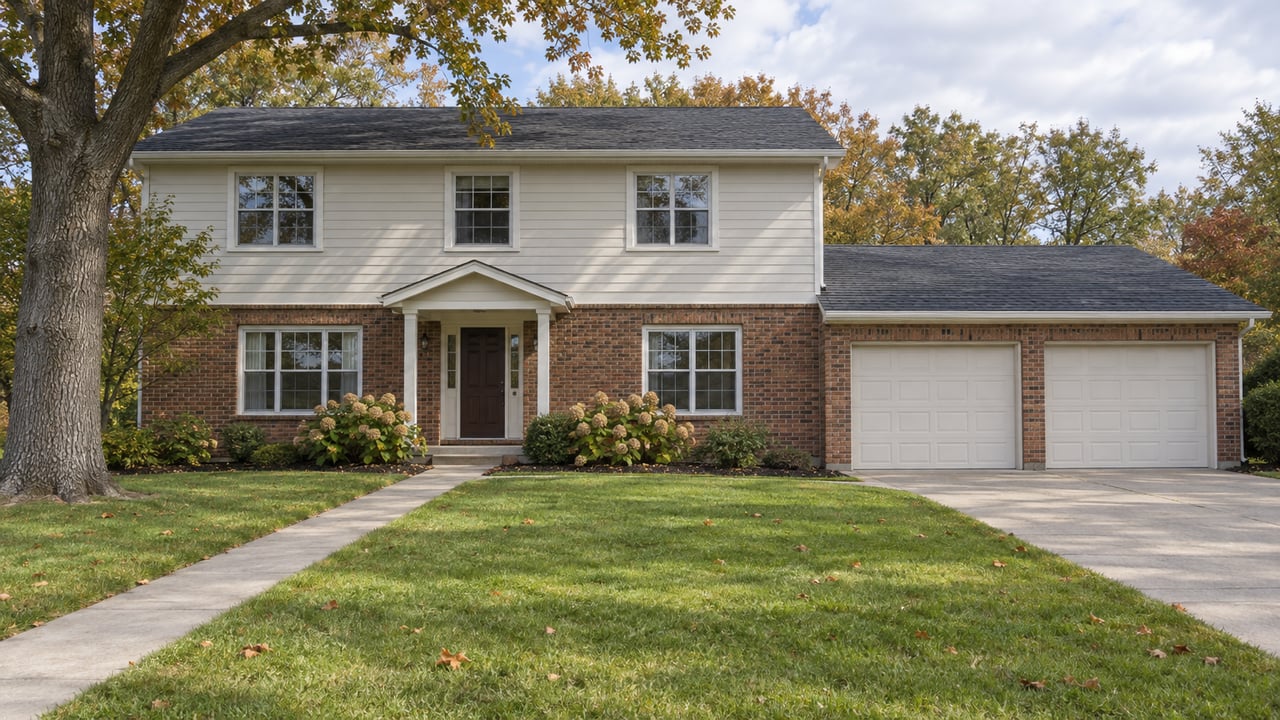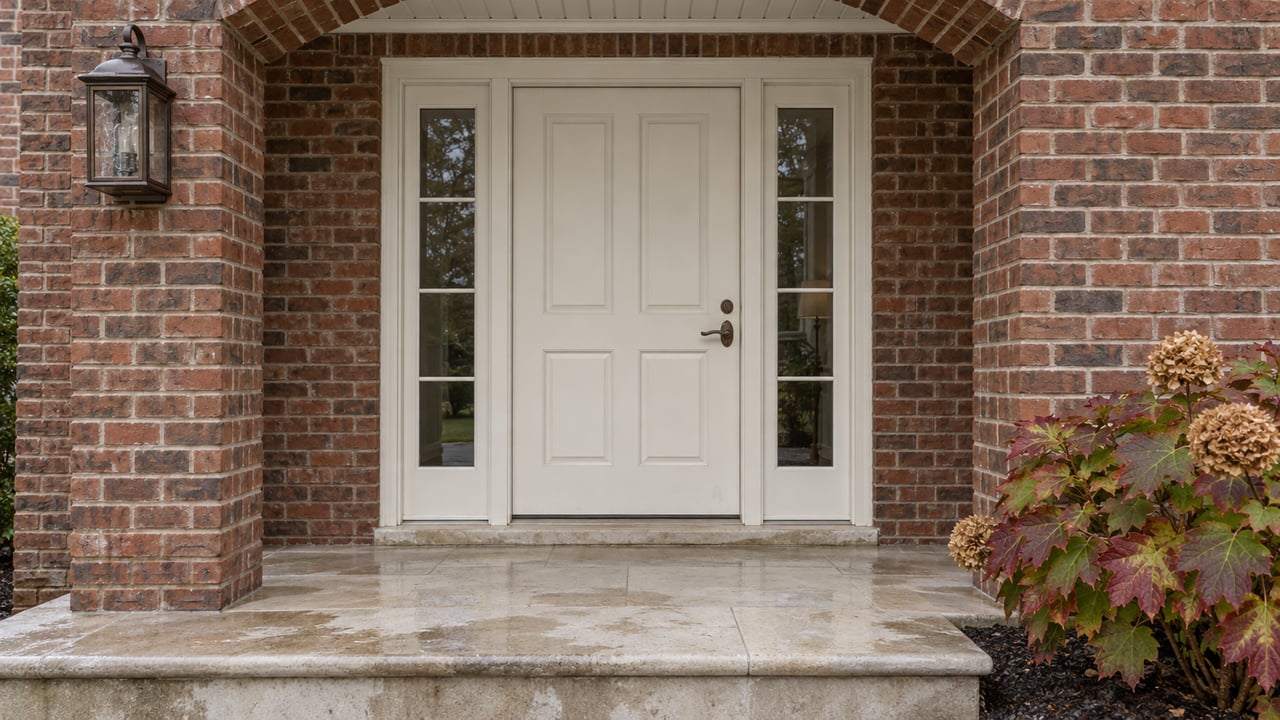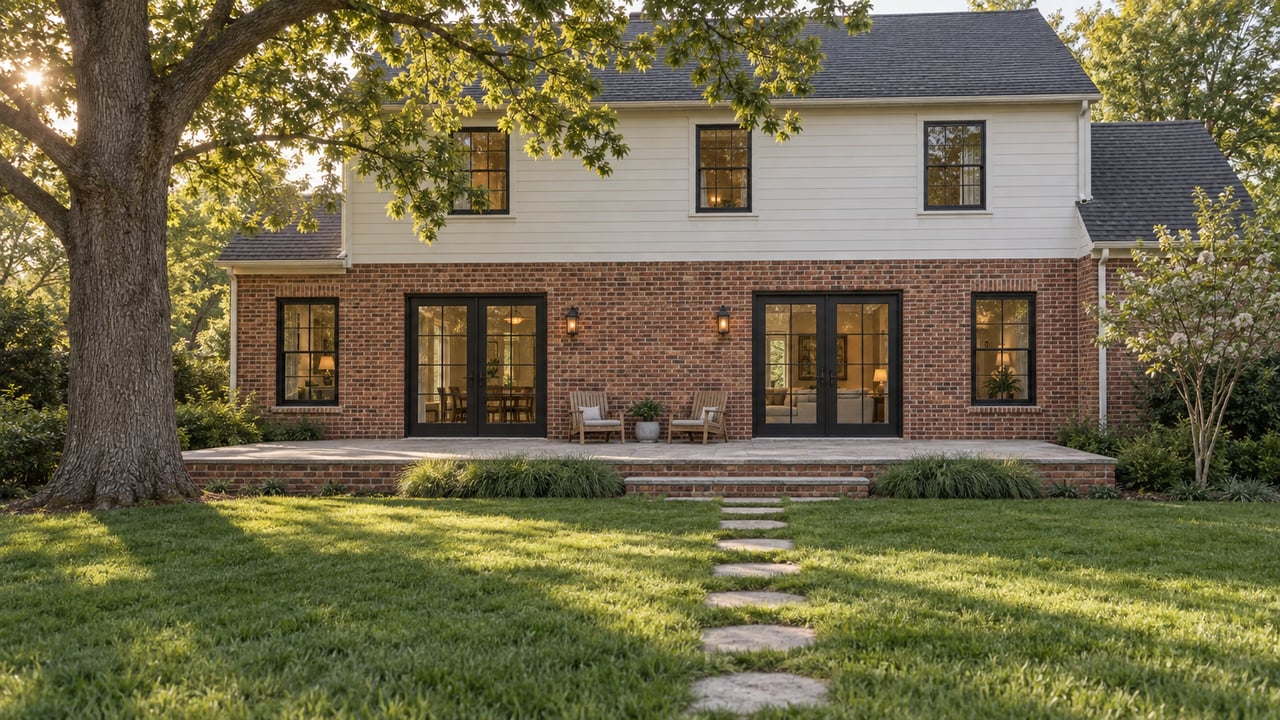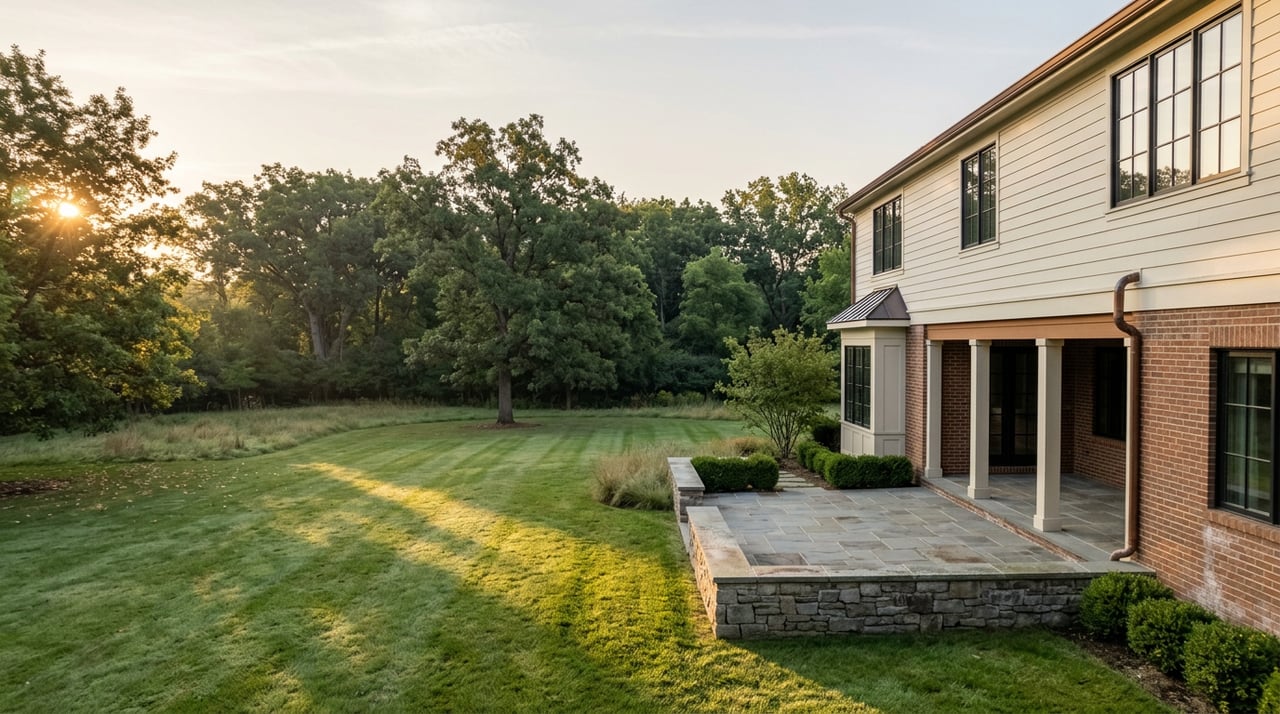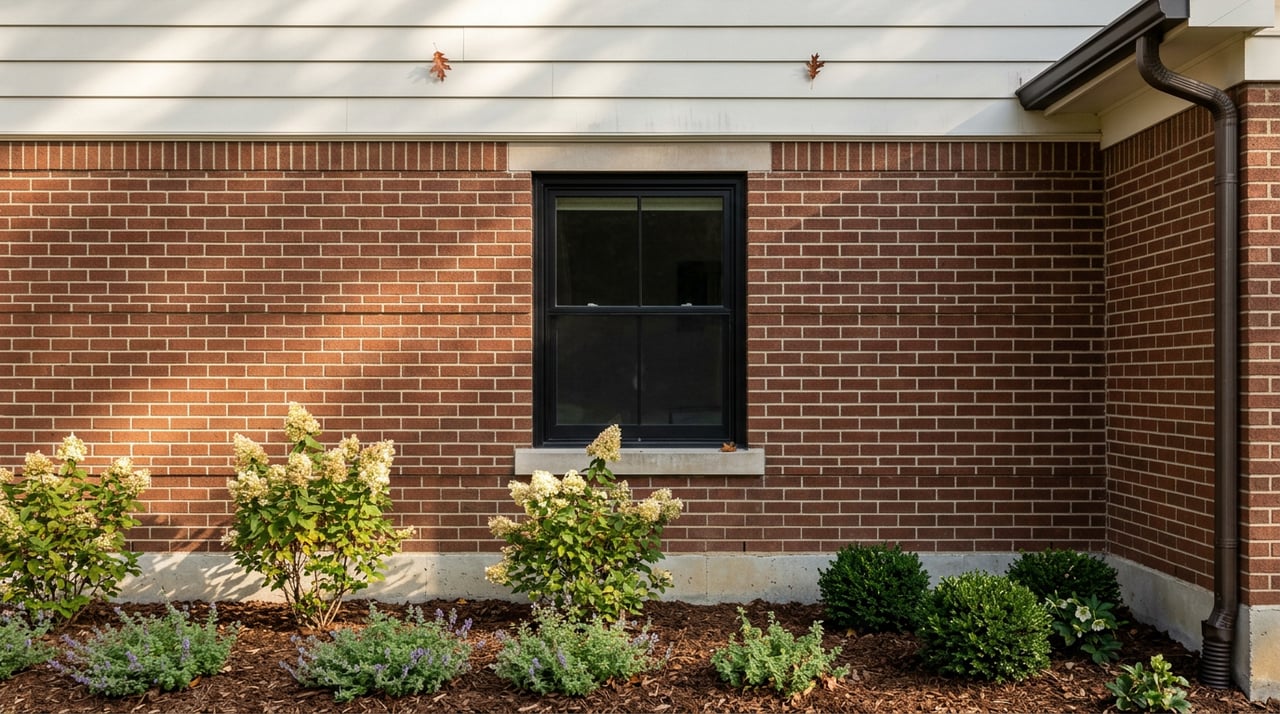
Two homes go up in Huntington Estates the same week. Both are four-bedroom colonials on quarter-acre lots off Rockbridge Drive. One lists at $649,000 and sells in twelve days. The other lists at $675,000 and sits. From the outside the story looks backwards. Look at the mechanical rooms and it inverts again.
Huntington Estates is a single cohort of housing stock. Homes were built between 1976 and 1987, which means every roof, furnace, water heater, and original window in the subdivision has now aged past the point where a Naperville buyer can assume anything. The list prices you see on the portals are converging into a narrow band. What they are hiding is a wide band of deferred capital work. That is the number that matters here, and it is not on the MLS sheet.
One subdivision, one build era, one shared clock
The neighborhood sits along Gartner between Washington Street and Naper Boulevard in the 60540 ZIP. It is a Naperville Park District service area with Huntington Estates Park at 867 Rockbridge Drive and a small green at 828 Rockbridge, plus the private Huntington Estates Bath & Tennis Club at 1315 Hobson Road. Homes range from about 1,890 to 4,165 square feet, HOA dues run $24 to $52 per month, and the average property tax bill sits near $10,738 per year.
That tight build window is the point. A subdivision developed across a twelve-year stretch behaves, mechanically, like a fleet. The roofs were installed in the same era. The original furnaces were the same generation. The plumbing came off the same shelves. Anything that has not been updated is on the same timeline, and that timeline is running out at the same time.
What the 2026 Naperville numbers are actually saying
The city-level data reads like a straightforward seller's market. Naperville was at 1.4 months of inventory as of mid-July 2026, the median detached single-family home hit $700,000 in April 2026, and well-priced homes were going under contract in roughly 20 to 28 days. Sale-to-list ratios have been sitting around 99.47%. Mortgage rates on a 30-year fixed have hovered between 6.15% and 6.9% for most of the year.
Read those numbers again with a Huntington Estates lens. The market is not paying a premium for square footage in this subdivision, because everyone's square footage is roughly similar. It is paying a premium for condition. Local seller-side analysis of the 2026 market makes the same point in plain terms: updated homes are outperforming the market average, and dated homes are being asked to compete on price. In a fleet of 1976-to-1987 homes, "updated" and "dated" is really a shorthand for how much of the original mechanical package is still in service.
The disclosure form is a capex map
Illinois gives buyers a document most of them read once and file away. That is a mistake in a subdivision this age. The Residential Real Property Disclosure Report that every non-exempt seller must complete has 23 line items covering roof, foundation, basement leakage, plumbing, electrical, HVAC, wells, septic, and more, with a 24th item added by 2022 amendments effective in 2023. It is not a warranty. Illinois case law is clear that an "as-is" clause does not waive the disclosure, and the form is drafted to reflect the seller's actual knowledge rather than an inspection result.
In a subdivision where every home is on the same clock, the disclosure form functions less as a legal shield and more as a spreadsheet of what is still original. Read it that way.
| Disclosure line item | What it usually means in a 1976–1987 Huntington Estates home |
|---|---|
| Roof, ceilings, chimney | Original 20-year asphalt shingle roofs have been replaced at least once, sometimes twice. A "no known defect" answer with a replacement date in the last five years is a different asset than a "no known defect" answer on a fifteen-year-old layover. |
| Plumbing | The polybutylene pipe era overlaps this build window. If the answer is silent and the walls have not been opened, it is a question, not a confirmation. |
| HVAC | Original 1980s furnaces are still turning up in Naperville subdivisions of this vintage, according to local HVAC contractors. A "no defect" answer on an unlabeled thirty-year-old unit is a countdown. |
| Basement flooding or leakage | Grading and drainage on quarter-acre lots have had four decades to settle. This is the item where sump pump age matters more than the checkbox. |
| Electrical | Panels from this era are usually serviceable but often full. A finished basement addition on an original panel is a red flag worth pricing. |
None of this is a reason to walk. It is a reason to read the form in one hand and the inspection report in the other, and to bring both into the offer.
The four systems that decide the price gap
Roofs
A twenty-year asphalt roof on a 1980 build has been replaced at least once, likely twice. What matters is whether the current roof is five years in or eighteen. A full tear-off on a mid-size Huntington Estates footprint is a five-figure line item. The disclosure box is binary. The bid you get from a roofer looking at the same shingles is not.
HVAC
Naperville sees winter lows around minus fifteen and summer highs into the mid-nineties. That 110-degree annual span is why local contractors report original 1980s equipment failing in older Naperville subdivisions when compressors and heat exchangers give out. A furnace-and-AC pair replacement is another five-figure line. A home in the subdivision where both units are ten years old is materially different from one where both are original, even at the same list price.
Plumbing
Polybutylene supply pipe, marketed under the acronym PB, was installed heavily during this build window and was the subject of a class-action settlement after crimp-fitting failures caused property damage. Not every home in Huntington Estates has it. Every home in Huntington Estates old enough to have it deserves the question. Copper is the default assumption from the era, but PB shows up often enough in the western suburbs to make it worth asking your inspector to look.
Windows
Aluminum-frame single-pane windows were standard in the late 1970s and early 1980s, and double-pane was an upgrade. A Huntington Estates home with original windows is heating and cooling through single-pane glass in a 110-degree climate swing. A full window replacement package on a 2,500 to 3,500 square foot home is not a small number, and it is one of the items that most cleanly separates a $649,000 listing from a $720,000 one.
The right way to read two Huntington Estates listings side by side is to ignore the list prices for an hour, price the mechanicals as if they were both original, and then work backward to what the seller is actually asking for the shell.
How to price the gap into your offer
Insurers give you a hint the disclosure form does not. Homes over thirty years old routinely trigger a four-point inspection request from the carrier, covering roof, plumbing, electrical, and HVAC. Every home in Huntington Estates is now inside that window. That is not a problem to solve. It is a checklist the industry has already written for you.
- Ask the listing agent for the age of the roof, furnace, AC, water heater, and windows before you write. If the seller does not know, that is information.
- Read the disclosure report line by line with the build year in mind. Silence on a forty-year-old system is not a green light.
- Order the general inspection with a sewer scope. Cast iron drain lines from the era are near the end of a common service life.
- Price the deferred items into your offer rather than into a repair-credit ask after inspection. Sellers in a 1.4-month-inventory market are quicker to say yes on price than on post-contract concessions.
- If two homes are within $25,000 of each other, let the mechanical package be the tiebreaker. In a market paying 99.47% of list, the shell is not where the negotiation lives.
FAQ
Are there homes in Huntington Estates on well and septic? The subdivision sits inside Naperville city services, so most homes are on municipal water and sewer. Well and septic issues are more common in unincorporated pockets of Naperville outside subdivisions like this one. The disclosure form still has line items for both, and they should read "not applicable" on a Huntington Estates home. If they do not, ask why.
Does the seller have to disclose a repair they already made? Illinois law asks about current condition based on actual knowledge. A repair that resolved a defect does not have to appear on the form, though many sellers volunteer it. As a buyer, it is fair to ask whether any of the "no" answers reflect prior issues that were fixed. That question surfaces the receipts.
Is it worth paying more for an already-updated home? That is the math this post exists to force. If the delta between two homes is smaller than the cost of the deferred work on the cheaper one, the more expensive home is the better trade. If it is larger, the cheaper home is the better trade and you write the check for the roof yourself. The 2026 Naperville data suggests updated homes are commanding a premium that is real but not always rational, which is exactly the kind of gap a careful buyer can use.
Buying in Huntington Estates is not a story about picking the right street. It is a story about pricing a shared mechanical clock across a subdivision that was built in one decade and is being sold in another. That is the sort of read that does not fit on a listing sheet, and it is the reason a good local team is worth the call. If you are weighing two homes here and want the capex math done before you write, Bill White Homes will sit down with the disclosure report, the inspection, and your offer, and tell you which one is the better deal in the terms that actually matter. Get in touch.