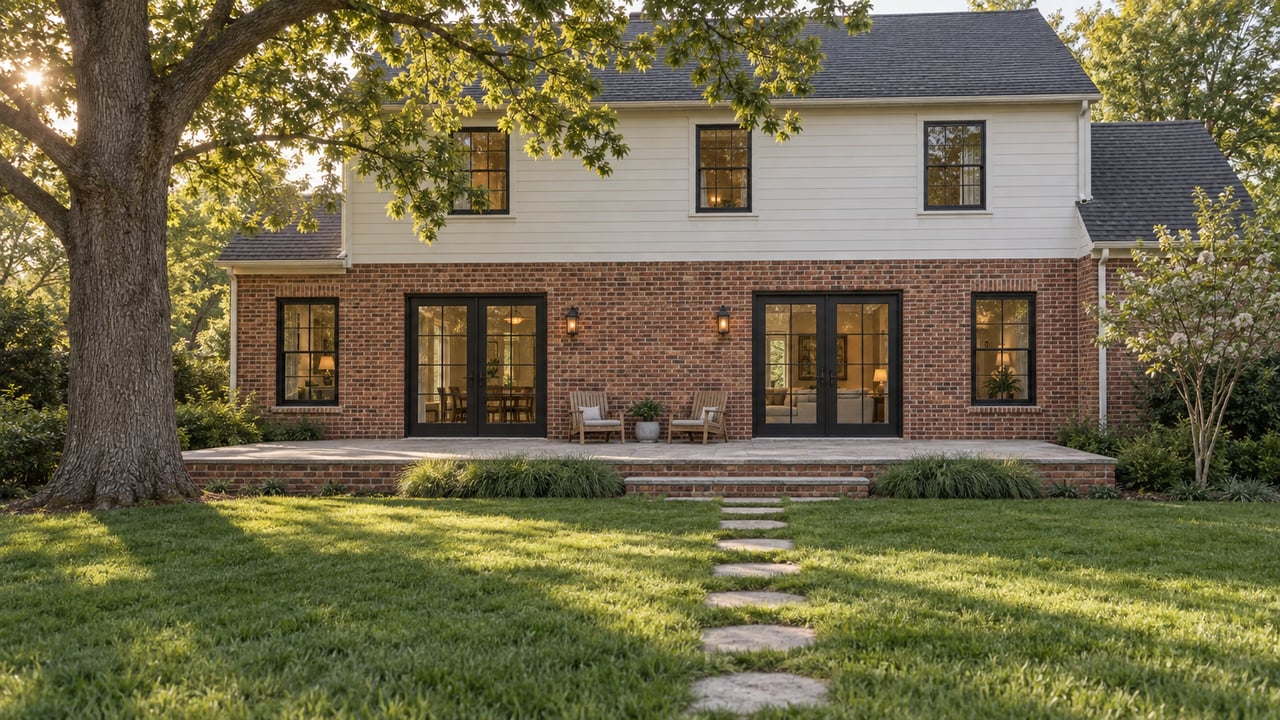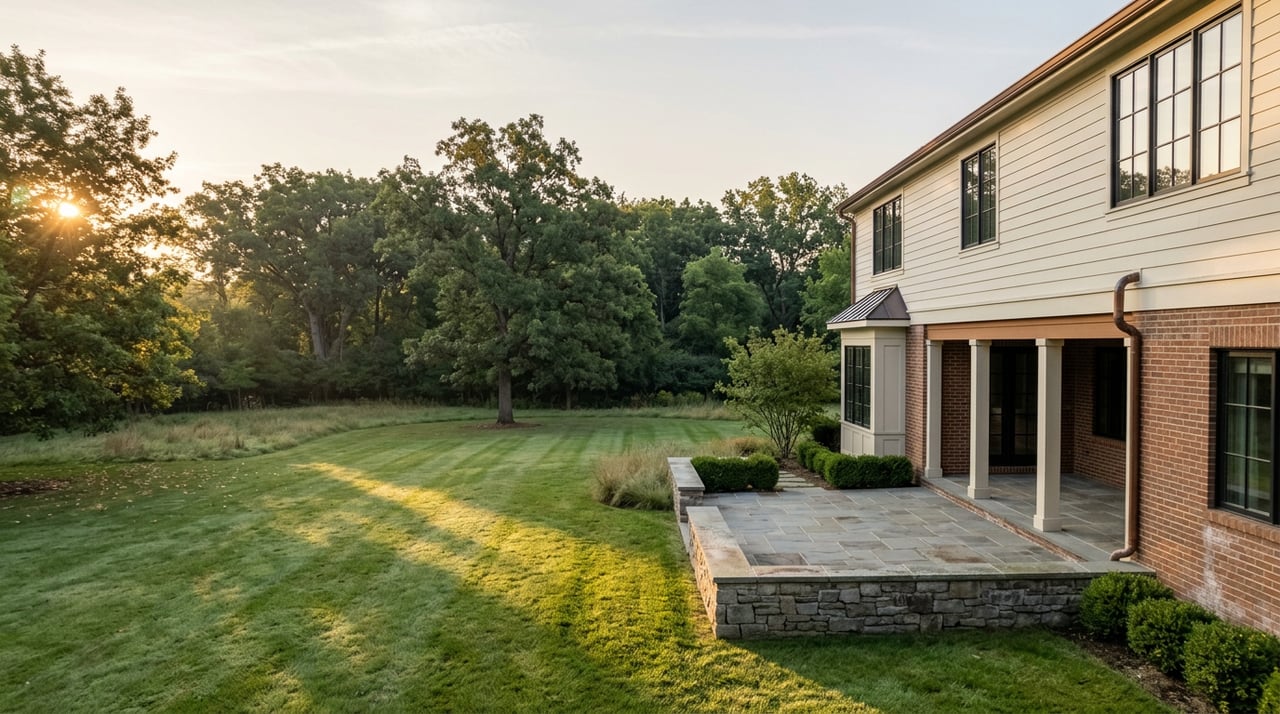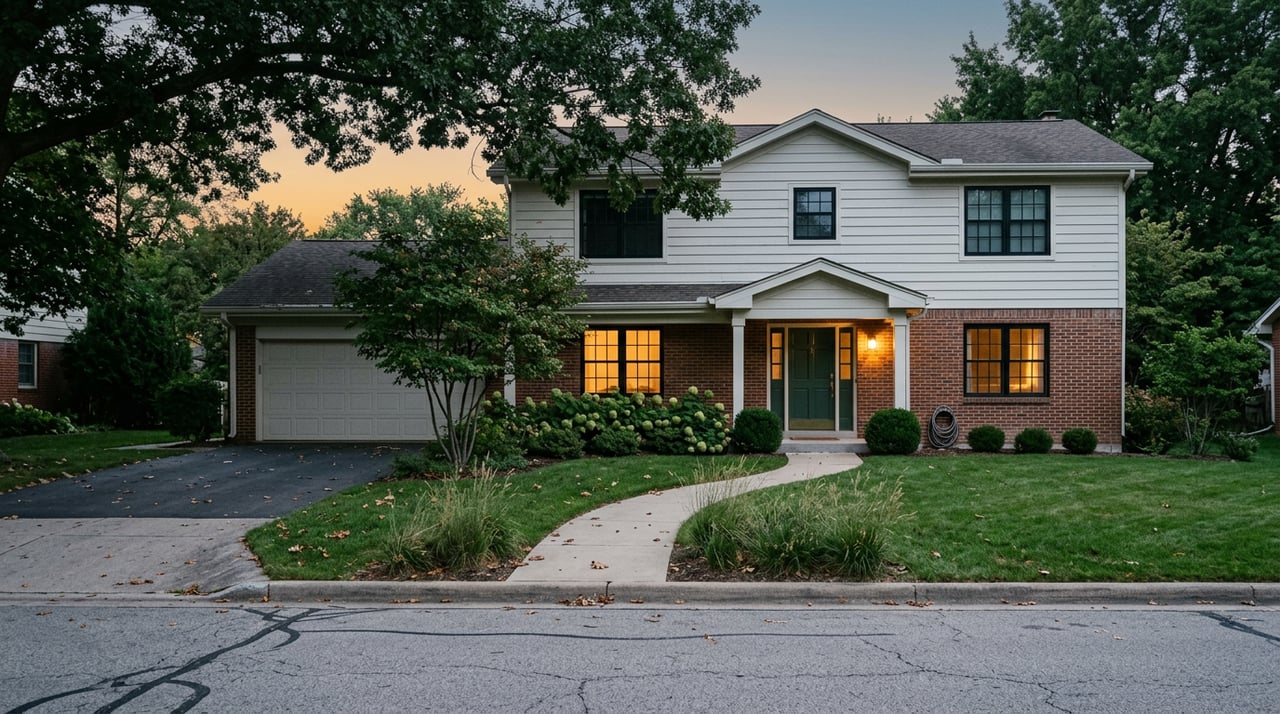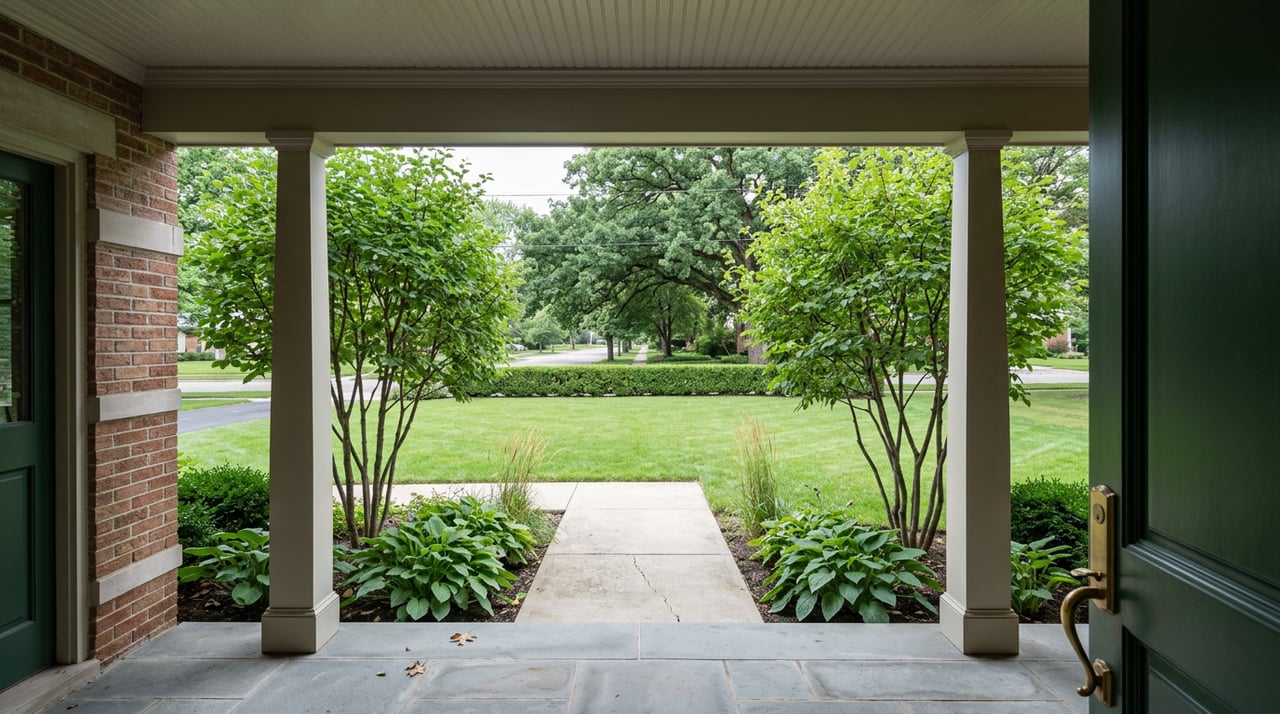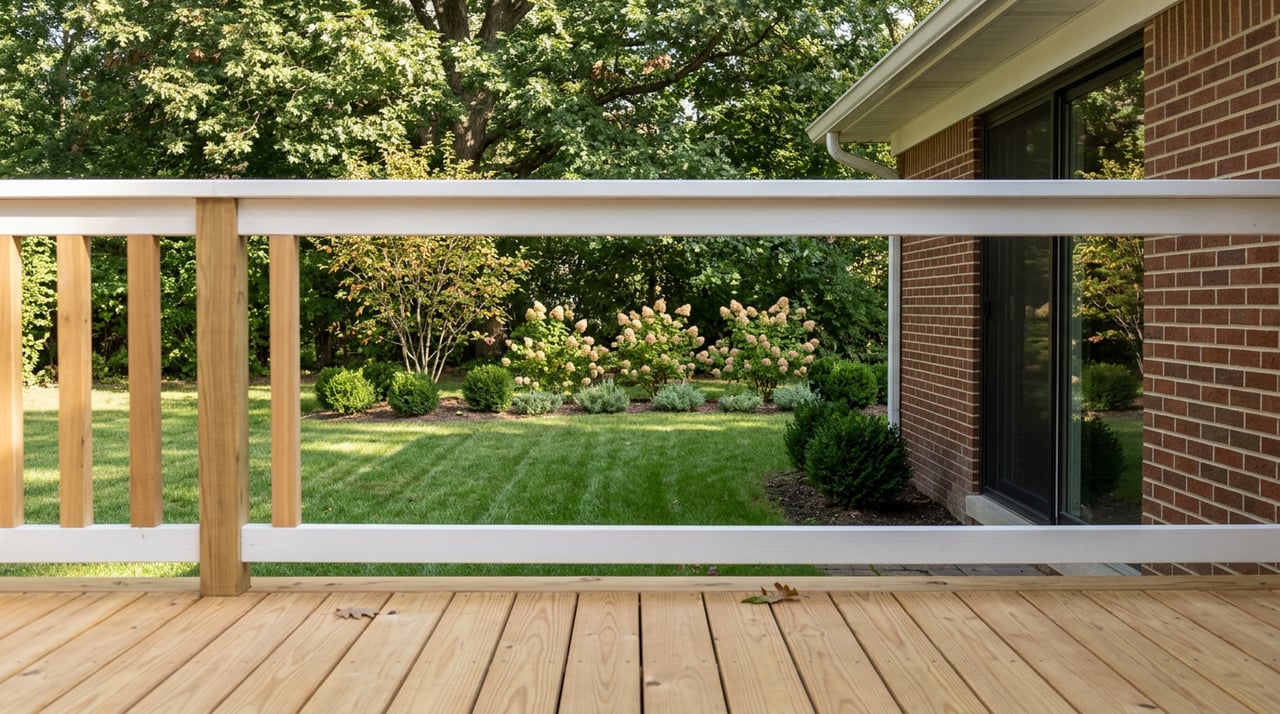
A homeowner on one of Century Hill's nineteen streets decides to rebuild a rotted deck before listing the house this fall. She pulls up the City of Naperville's permit portal, the same one her sister used two miles away in an incorporated part of town, and starts an application. It bounces. Her address does not exist in that system, because her address is not the City's to permit. It belongs to DuPage County.
That single redirect is the whole story of Century Hill real estate that nobody tells you until you are mid-project. The neighborhood looks and lives like the rest of Naperville. It does not permit like the rest of Naperville.
What "Unincorporated" Actually Buys You Here
Century Hill was developed starting in 1966 by The Krughoff Company and now holds more than 300 homes across those nineteen streets, most built between the 1960s and 1980s. It sits in unincorporated DuPage County just north of the city, with Naperville Country Club to the west and open land backing the neighborhood to the north. Two entrances, both off Chicago Avenue, keep through traffic out.
Here is the part that trips people up in both directions. Some buyers hear "unincorporated" and assume well water and a septic field, the classic rural-fringe setup. That is not what is happening here. Century Hill homes run on full City of Naperville sewer and water service, the same utility bill a resident three blocks inside the city limit would get. Other buyers hear "unincorporated" and assume it changes nothing meaningful since the services look identical. That is also wrong, just in the opposite direction.
The land itself, not the pipes running under it, determines who regulates what gets built on it. Naperville supplies the water. DuPage County supplies the government.
The Layer Nobody Mentions Until You Pull A Permit
Building permit authority in Illinois follows municipal boundaries, not utility service areas. Because Century Hill's parcels were never annexed into the City of Naperville, the County's Building and Zoning Department, not the City's Transportation, Engineering and Development group, reviews and issues permits for the property. DuPage County states this plainly on its own site: county permits apply only to unincorporated areas, and if an address sits inside a city or village, the applicant needs to go to that municipality instead.
For Century Hill, that office is DuPage County Building and Zoning, based at the Jack T. Knuepfer Administration Building, 421 N. County Farm Road in Wheaton. Applications go through the county's Accela-based portal rather than the City's Civic Access system, and questions go to the Building Division at 630-407-6700 rather than Naperville's permit line.
The county adopted an updated building code effective January 1, 2024, and it maintains its own fee schedule, separate from the City's. A few line items from that schedule show what a Century Hill homeowner is actually pricing when a project touches the outside of the house:
| Project type | County fee structure |
|---|---|
| Remodeling | Based on cost of construction, $100 minimum |
| Decks, patios, piers | $10.00 per square foot |
| Accessory structure, 150 sq ft or less | $10.00 per square foot |
| Accessory structure over 150 sq ft (detached garage, screened porch, gazebo) | $30.00 per square foot |
| New construction | $90.00 per square foot |
| Added electrical circuit (generator, outdoor lighting) | $100.00 per unit |
Compare that to the City of Naperville's own posted structure, where the baseline is an $18 administrative fee plus project-specific review costs, often billed by the page for plan checks. Neither system is expensive relative to the scope of most projects. The point is not the dollar amount. It is that a Century Hill seller pricing a pre-listing deck rebuild is running county math, not city math, and if they price the project using a City of Naperville contractor's typical estimate, the permit line item will not match.
Pools and spas carry their own wrinkle. DuPage County requires a permit for swimming pool and hot tub installations and enforces its own electrical requirements for them, built around the 2020 National Electrical Code. A buyer who closes on a Century Hill home planning to add a pool the following spring is not filing with the City's swimming pool permit program at all. They are filing with the county, under the county's own pool electrical rules.
Three Approvals, Not One
There is a second layer that has nothing to do with government. Century Hill has an active homeowners association, the Century Hill Homeowners Association, based at 25W260 Gunston Ave., with its own leadership and its own architectural expectations for the neighborhood. A county permit does not substitute for HOA sign-off, and HOA sign-off does not substitute for a county permit. A fence, a deck, or an addition in Century Hill typically needs both, reviewed independently, on independent timelines.
This is where sellers preparing a listing lose the most time. They budget for one approval process and discover they are running two in parallel, one through a county office in Wheaton and one through neighborhood volunteers who meet on their own schedule.
Why This Catches Sellers Off Guard
Naperville Township's own guidance to residents in unincorporated pockets like Century Hill is direct: virtually every improvement on a residential lot needs a permit or waiver, from fences and decks to sheds and pools, and if a homeowner skips it, the cost of coming into compliance, including possible removal of unpermitted work, lands on the homeowner. That liability does not disappear at closing. It transfers with the house.
County permits also carry their own clock. Once issued, work has to start within 180 days or the permit voids, and if more than 180 days pass between required inspections, it voids as well. For simple projects, county review can move in a matter of days. More involved projects, additions, new accessory structures, anything requiring a fuller plan review, commonly run one to three weeks depending on how complete the initial submission is. A seller who assumes a quick City-style turnaround and starts the permit process three weeks before a target list date is cutting it closer than they think.
If you are preparing to sell a Century Hill home and any part of the prep touches the exterior:
- Confirm the project needs a county permit rather than assuming City rules apply, since the two systems are not interchangeable.
- Submit through the county's online portal early, since review timelines run longer than a same-week City turnaround for anything beyond a minor repair.
- Check with the Century Hill Homeowners Association separately and in parallel, not after the county approves the work.
- Keep a copy of any prior permit history for the property. An open or unresolved permit from a previous owner's project becomes a disclosure issue at resale.
- Schedule required inspections as soon as each phase finishes, since a lapse of more than 180 days between inspections can void the permit and force a restart.
What Buyers Should Ask Before They Plan A Pool
For a buyer eyeing Century Hill because they want the mature lot and the lower unincorporated tax rate, the practical question is not whether they can add a pool, deck, or addition. It is which office they will be dealing with once they own the house. The answer is DuPage County Building and Zoning for the permit itself, and the Century Hill Homeowners Association for design approval, not the City of Naperville for either one. Knowing that before the offer goes in means the renovation timeline in year two does not come as a surprise.
FAQ
Does Century Hill use well water and a septic system? No. Despite sitting in unincorporated DuPage County, Century Hill homes receive full City of Naperville sewer and water service.
Where do I check the status of a permit for a Century Hill address? Through DuPage County's online permitting portal, or by calling the Building Division at 630-407-6700. The office is located at 421 N. County Farm Road in Wheaton.
Does the City of Naperville have any say over Century Hill renovations? No. Because the parcels were never annexed into the city, permitting authority for structural and exterior work rests with DuPage County, not the City.
Is county HOA approval required in addition to the permit? Yes, separately. The Century Hill Homeowners Association reviews projects on its own timeline, independent of the county's permit review.
How long is a county permit valid once issued? Work must begin within 180 days of issuance, and no more than 180 days can pass between required inspections, or the permit voids.
If you are weighing a move into Century Hill, prepping one of its homes for sale, or trying to figure out what a renovation timeline actually looks like once you own there, Bill White Homes can walk you through it with the specifics that matter for this particular subdivision. Get in touch before you pull a permit, not after.