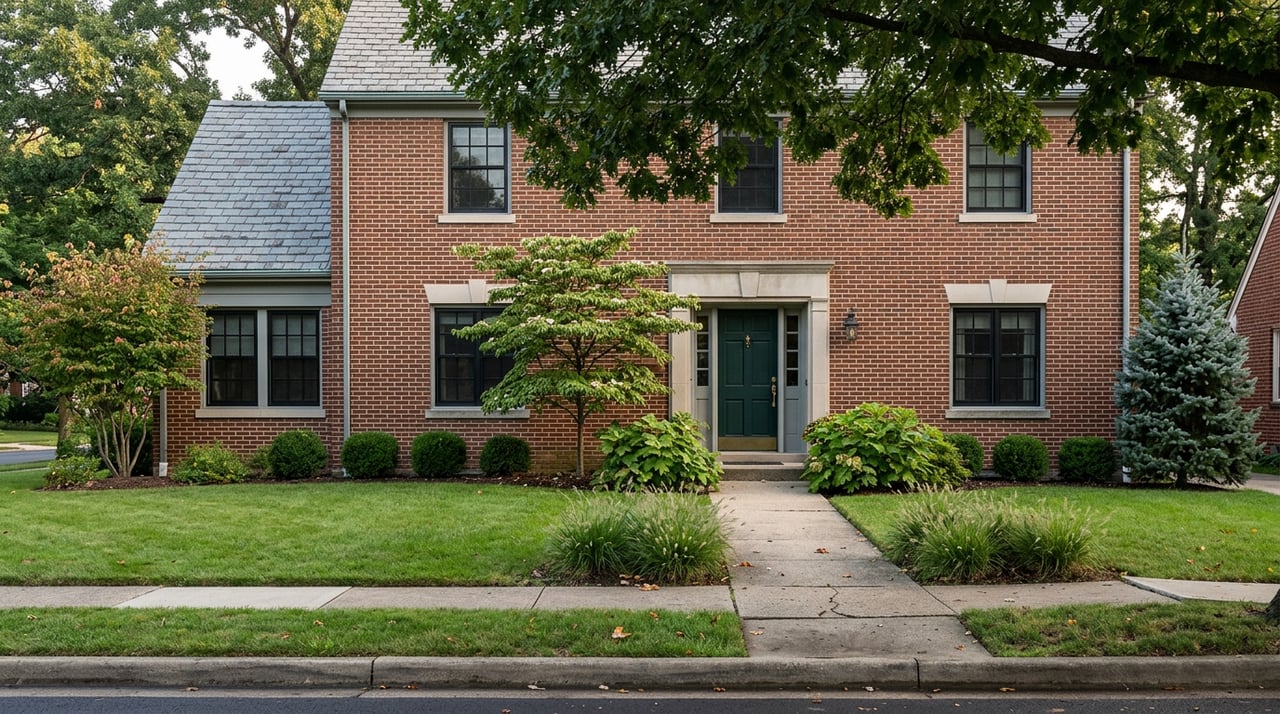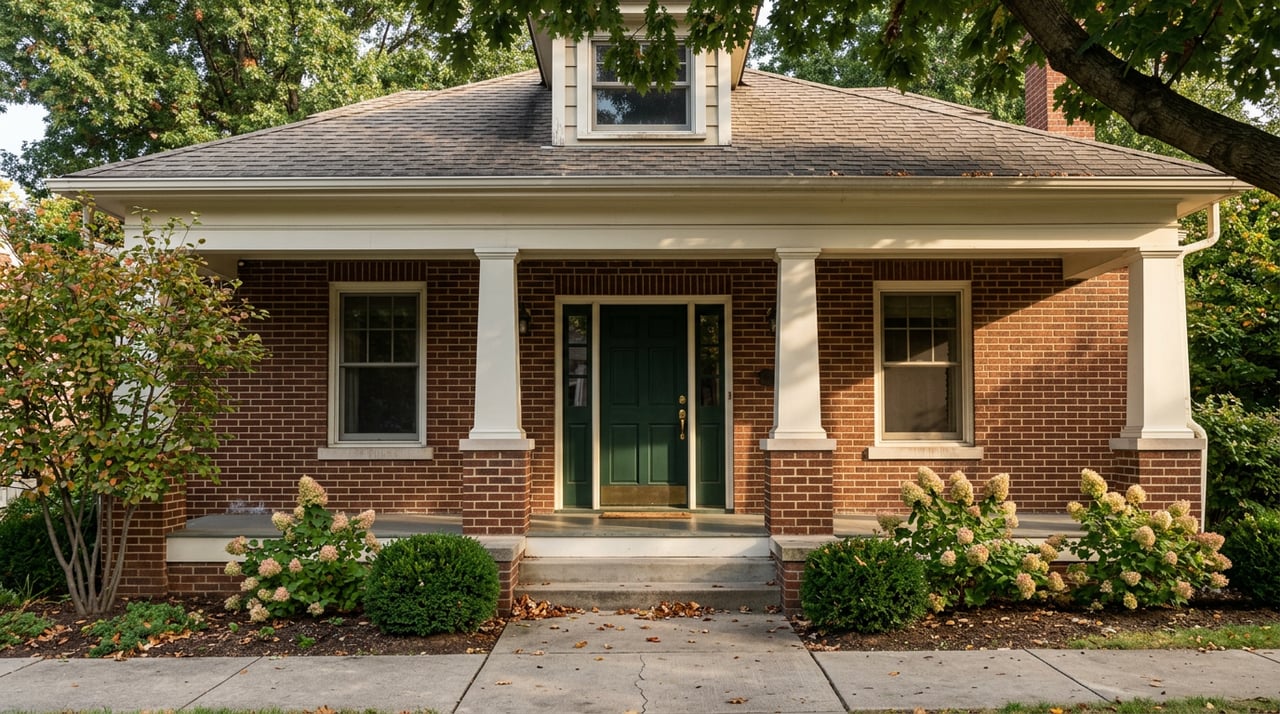
You find a brick foursquare two blocks off the Riverwalk, walking distance to the Metra platform, the kind of house that shows up on a map layer labeled "Naperville Historic District." Your first assumption is probably wrong in one direction or the other. Either you think that label means you can't touch the siding without a hearing, or you think it's decorative, a nod to the neighborhood's age that has no bearing on what you're allowed to build. Neither assumption holds up, because Naperville actually has two historic districts stacked over the same downtown blocks, and only one of them can stop your contractor.
That distinction matters most in a neighborhood like Declara Heights, where older bungalows and foursquares along streets like Julian, Huffman, and Columbia sit close enough to the historic core that buyers routinely see "historic" on a listing sheet without knowing which version applies to their specific parcel.
Two districts, one confusing overlap
Naperville's federal historic district was established in 1977, built around a National Register listing that originally covered buildings constructed on or before 1927, since the National Register generally requires a structure to be at least 50 years old. In 2012 the city updated that district to add eligible buildings constructed through 1962 and to drop properties that had lost their historic integrity or been demolished. The federal district now includes roughly 492 contributing buildings alongside 86 that don't contribute to its historic character.
Here's the part that trips people up: that federal listing carries no design authority on its own. The city's Historic Preservation Commission has no jurisdiction over a property inside the federal district unless that same property also sits inside Naperville's separately drawn local historic district, the one the City Council created in 1986, or has been individually designated a landmark.
| Federal (National Register) District | Local Historic District | |
|---|---|---|
| Established | 1977, updated 2012 | 1986 |
| Who enforces it | National Park Service listing status | City of Naperville Historic Preservation Commission |
| What it actually restricts | Nothing on its own | Exterior alterations, additions, demolition |
| What it's useful for | Eligibility for certain historic preservation incentives | Certificate of Appropriateness (COA) approval process |
| Approximate scope | About 492 contributing buildings, 86 non-contributing | A separately drawn boundary within the same downtown core |
If your future home sits only in the federal district, you can generally replace windows, repaint, or reside without a city design review. If it sits in the local district, or carries individual landmark status, the calculus changes completely.
What the local district actually requires
Inside the local historic district, most exterior work needs a Certificate of Appropriateness before a permit gets pulled. The city sorts COA applications into three tracks.
- Exempt work. Some routine maintenance and like-for-like repairs don't need a COA at all.
- Fast track. Certain improvements qualify for an expedited staff-level review rather than a full commission hearing.
- Full Historic Preservation Commission review. Anything more complex, including most additions, material changes, and demolition requests, goes before the nine-member commission at a public meeting.
That third track is where timelines stretch. A complete submission commonly takes four to eight weeks to reach a commission decision. If revisions or an appeal follow, add another two to eight weeks or more. Building permits still have to be pulled after the COA is approved, which adds further time depending on the scope of the project. An approved COA is only good for three years from the date it's issued, so a renovation that stalls for financing or contractor scheduling reasons can outlive its own approval.
The city's own Historic Building Design and Resource Manual goes further on one specific point: full demolition of an existing structure to make way for a new primary building is highly discouraged. If your plan for a Declara Heights lot involves scraping an older house to build larger, that's the assumption you need to test before you write an offer, not after.
A siding project that became a City Council matter
The gap between "minor exterior update" and "commission-level fight" isn't theoretical. A 2024 case at 223 Center Street involved replacing existing cedar siding with Hardie Board siding along with additional demolition work that had already been completed on the property. The Historic Preservation Commission denied the COA, and the matter went to City Council on appeal, with the council weighing whether to concur with the work as done or uphold the commission's denial.
The lesson isn't that siding replacement is always a problem. It's that "like-for-like" is a judgment the commission makes, not a category you get to declare on your own timeline.
Anyone buying with renovation plans should treat that distinction as a cost of doing business inside the local district, not a worst-case scenario.
The boundary itself is being reworked right now
Two things happening in 2026 are worth knowing if you're looking at a Declara Heights property with future renovation in mind. In June 2026, the city released an update to its Naperville Local Historic District Survey Area report, a full reassessment covering demolition and new construction patterns, alterations to existing structures, and an updated COA requirement matrix. Survey updates like this are how the city periodically checks which properties still contribute to the district's historic character and which streets carry which designation, and the boundary that applies to a given block can move as a result.
Separately, in December 2025 the Historic Preservation Commission recommended that City Council designate the 1906 sanctuary building of the First Congregational Church of Naperville as a local landmark, with a council hearing that was expected in February 2026. Before that recommendation, the city recognized five local landmarks: the Truitt House, the Thomas Clow House, the Naperville Woman's Club, the Old Nichols Library, and the Beidelman Buildings. The city's landmark count has since risen to six, consistent with that designation having gone through. Landmark status is rare in Naperville, but it isn't frozen. New designations do happen, and each one adds another property where individual COA rules apply regardless of district boundaries.
None of this changes what applies to a specific Declara Heights address today, but it's a reminder that the map isn't static. A property's status is worth confirming at the time you're actually making decisions, not based on what a listing description said six months ago.
What this means before you make an offer
If a Declara Heights property has renovation, addition, or rebuild plans attached to your purchase, the sequence that protects you is straightforward. Confirm whether the specific parcel sits in the local historic district, the federal district only, or both, before you write contingencies around timeline or scope. If it's in the local district, build the COA review window into your closing and construction schedule rather than treating it as an afterthought. And if a full teardown is part of the plan, treat the city's stated preference against total demolition as a real constraint on what you can do with the lot, not a formality to work around.
None of this is a reason to avoid the neighborhood. Downtown-adjacent housing stock with this kind of character is exactly what draws buyers to Declara Heights in the first place. It's a reason to know which rules actually apply to your address before you fall in love with a renovation plan the commission may not approve as drawn.
FAQ
How do I find out if a specific Declara Heights address sits inside the local historic district rather than just the federal one? Check the city's property mapping tool or contact Naperville's planning staff directly before you write an offer that depends on renovation plans. The federal and local district boundaries don't automatically overlap, and confirming status early avoids surprises after closing.
Does a Certificate of Appropriateness apply to changes I can't see from the street? COA review generally focuses on exterior features visible from the street or from neighboring properties. Interior changes typically fall outside that review, though standard building permits from the city's Development Services Department still apply.
What if my plan is an addition rather than a material swap like siding or windows? Additions generally go through full commission review rather than the fast track, and the city's design guidance expects additions to be visually subordinate, often set back from the front facade and lower than the original roofline. Plan your timeline around the commission hearing schedule, not the exempt or staff-level tracks.
If you're weighing a Declara Heights property with renovation plans attached, it's worth having someone confirm the district status and realistic timeline before your offer's contingencies are set, not after. Bill White Homes has spent decades working through exactly this kind of downtown Naperville detail with buyers and sellers. Get in touch before you write the offer, not after the COA hearing gets scheduled.