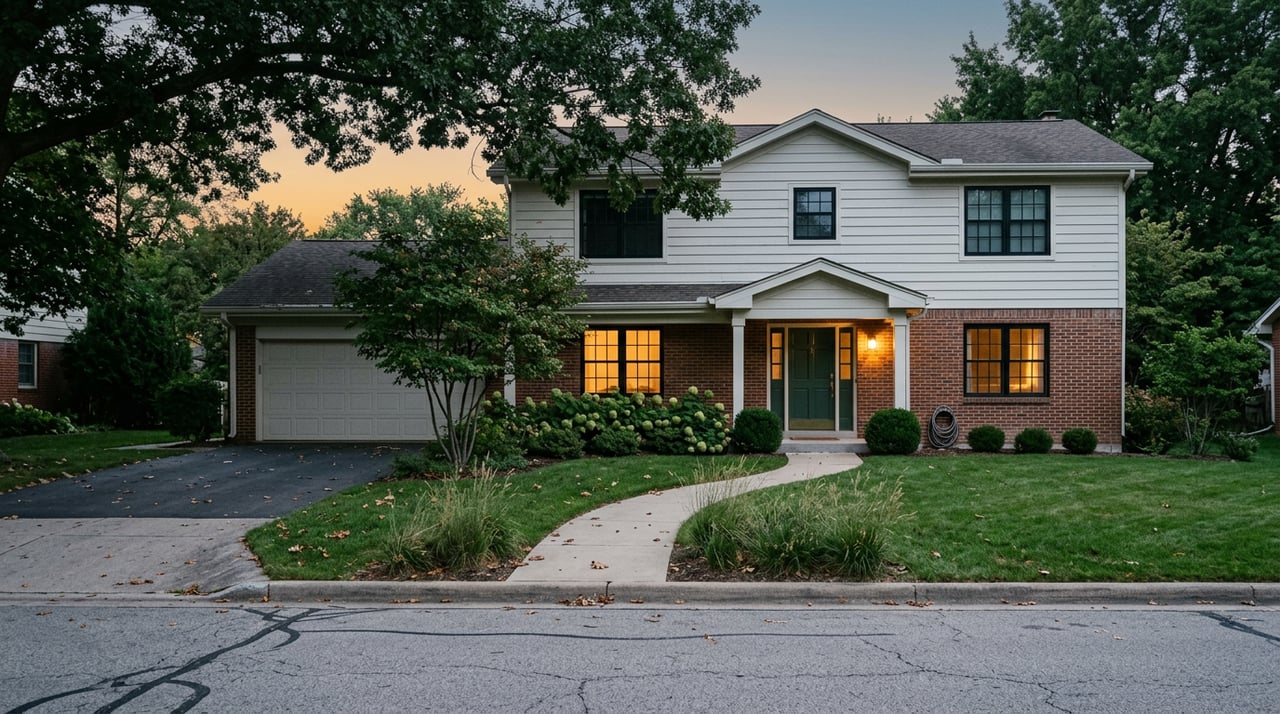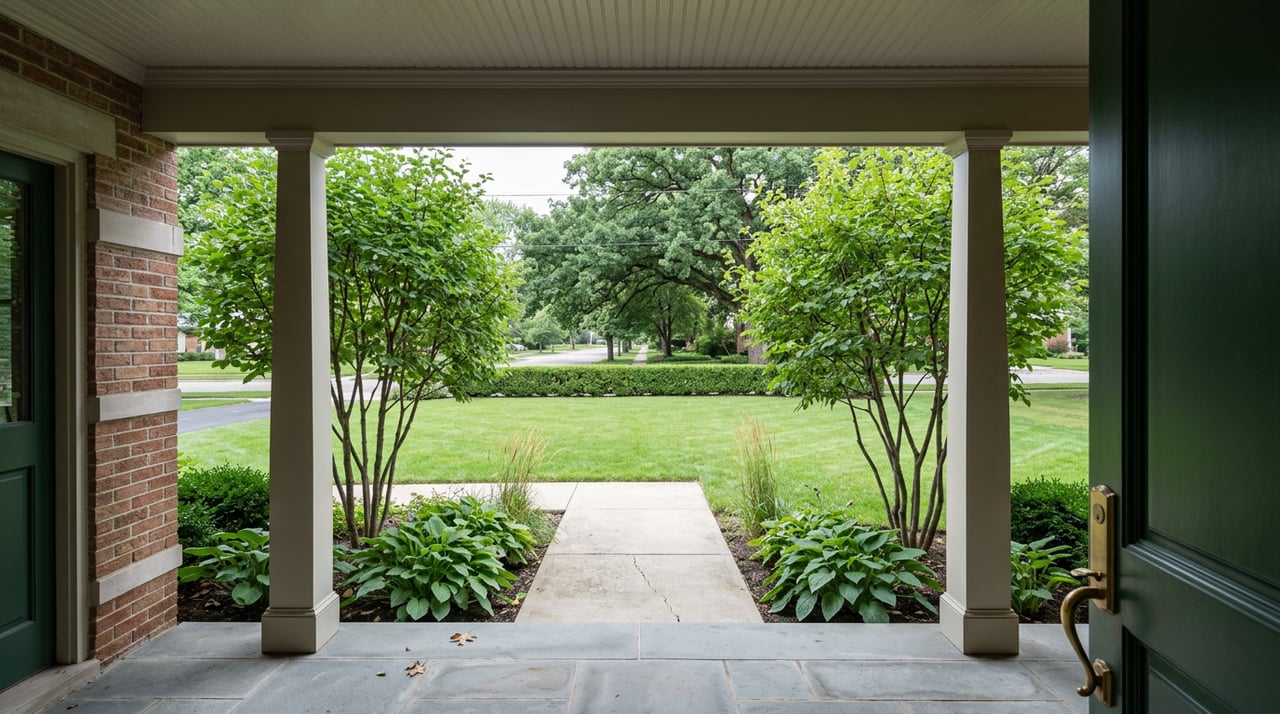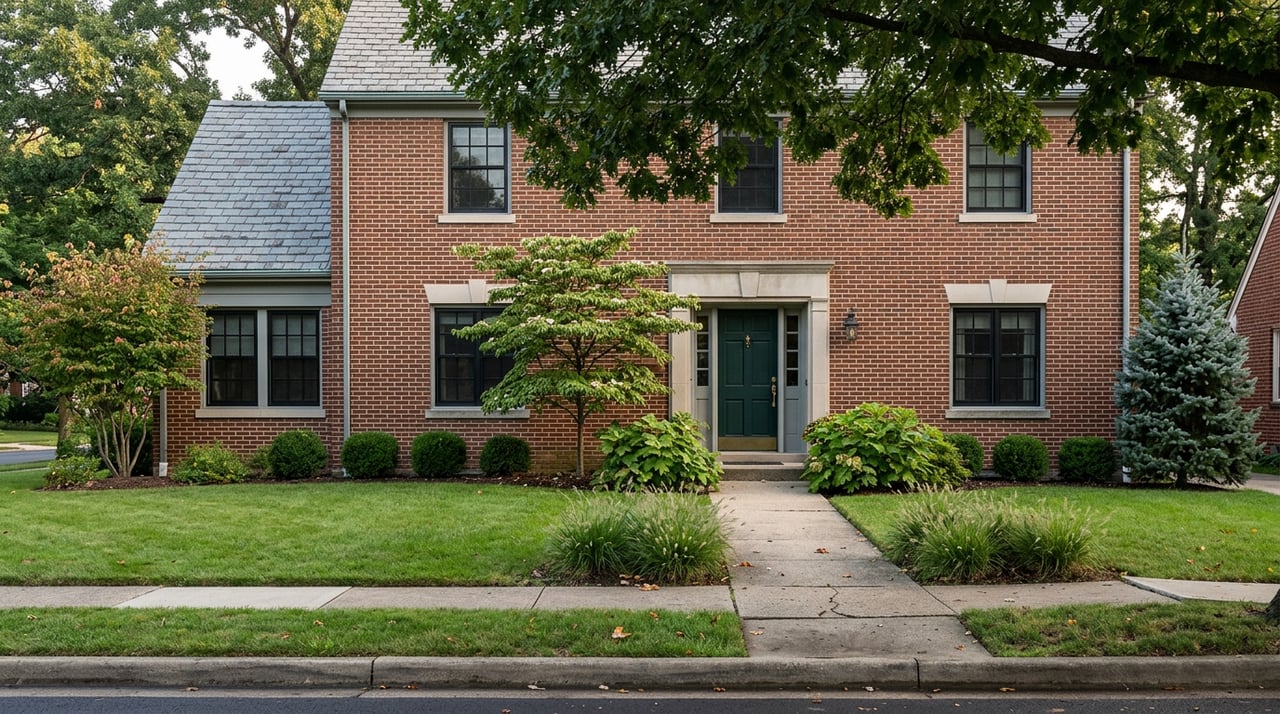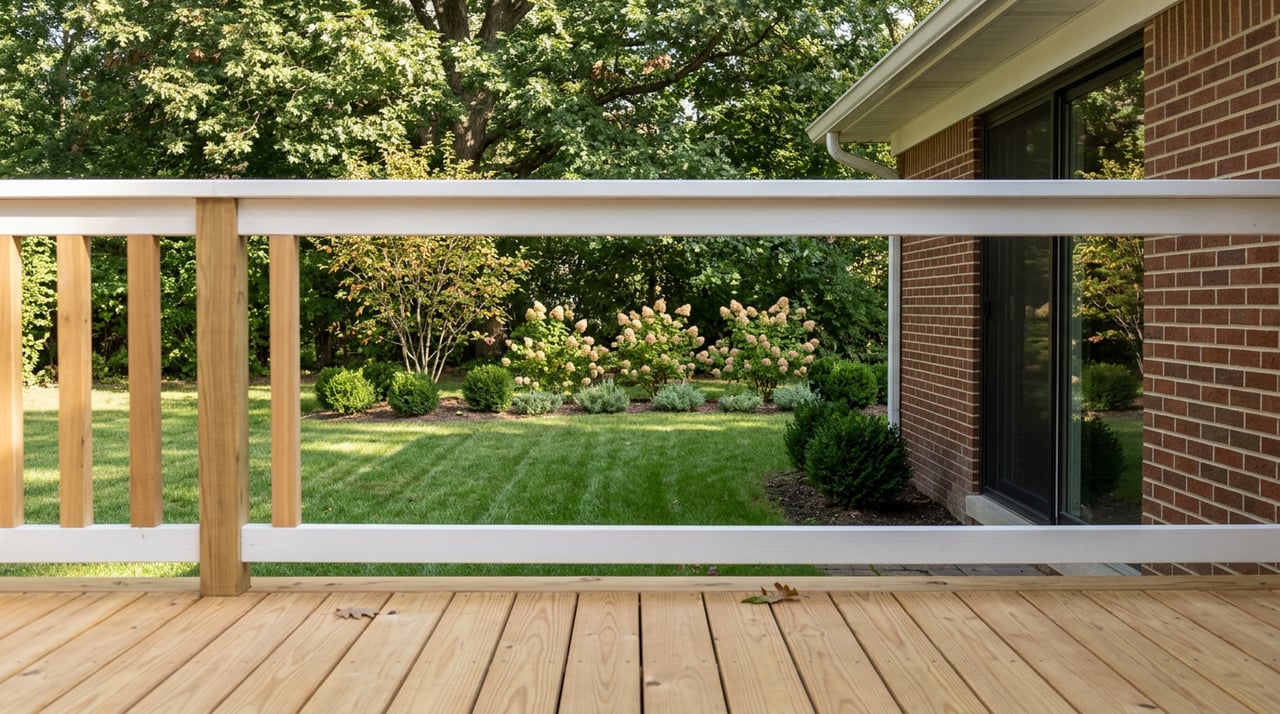
On a block just west of the Metra tracks, the scaffolding tells you more than the price sheet does. Building 7 at Heritage Place has recently broken ground at the corner of School Street and Columbia Avenue, one more crane in a stretch of downtown Naperville where a nearly 120-year-old mansion is being restored a few hundred feet from framing crews putting up brand-new rowhomes. The mansion belonged to Peter Kroehler, a former Naperville mayor, and it's being kept standing on purpose. Everything being built around it is new.
If you'd pulled up two different real estate sites the same week this summer to check what a home costs in this neighborhood, you'd have walked away with two numbers that don't belong to the same market. That gap is not a data error. It's the story.
The Same Three Months, Two Different Numbers
Redfin's neighborhood data for Downtown Naperville, covering the three months ending in May 2026, showed a median sale price of $960,000, up 28.0 percent from the same period a year earlier, with price per square foot at $508, up 41.5 percent, and homes taking an average of 121 days to go pending. Homes.com's own downtown Naperville tracker, reflecting closings as recent as this summer, showed a median sale price of $402,500, down 44 percent year over year, with homes selling in 20 days.
| Redfin (3 months ending May 2026) | Homes.com (closings through summer 2026) | |
|---|---|---|
| Median sale price | $960,000 | $402,500 |
| Year-over-year change | +28.0% | -44% |
| Typical time to sale | 121 days | 20 days |
Same neighborhood boundary, roughly the same calendar stretch, and a median that differs by more than half a million dollars depending on which handful of closings landed in the sample. For context, Naperville's citywide detached single-family median sat at $699,000 for the trailing 12 months through March 2026, per MRED, the region's multiple listing service, with an average sale price of $787,369. Downtown's number should sit above the city average. It shouldn't be unrecognizable from one data pull to the next.
What's Actually Moving the Number
Downtown Naperville doesn't sell enough homes in any given month for a median to behave the way it does in a larger, more liquid market. When transaction counts are small, a single new-construction closing or two can swing the whole read, because the sample isn't measuring "the market." It's measuring whichever few addresses happened to close.
Right now, that sample is being fed by three active construction pipelines. Heritage Place, developed by DJK Custom Homes with Ram West Capital, is delivering 41 luxury rowhomes around the preserved Kroehler estate, with units starting near $1.1 million. More than half the community had sold as of the builder's most recent construction update, and framing is underway on Building 3 near the community's planned Rose Garden while Building 7 goes up at School and Columbia. A few blocks over, The West End, designed by Lakewest Homes, is placing custom builds like 111 S. Webster on individual downtown lots, offering more than 5,400 square feet across three levels plus a finished basement on roughly a nine-month build timeline once preliminary city approvals clear. M/I Homes has its own four-level new-construction townhomes going up on West Benton Avenue and Main Street, running from roughly 2,600 to just over 4,000 square feet.
None of that is small-scale infill. It's a wave of product priced well above what an existing 1900s to 1960s downtown home commands, closing in the same handful of months as a sale-to-list dataset built on resale bungalows and cottages. Whichever set of addresses happens to clear escrow first decides whether the headline says the neighborhood jumped 28 percent or fell 44.
The median isn't broken. It's just reporting a construction schedule and calling it a housing market.
Why the Historic District Builds Differently
This matters for a second reason, and it's the one that catches buyers and sellers off guard once they're actually under contract. Naperville's locally designated historic district covers roughly 320 properties, about 250 of them residential homes, plus part of the North Central College campus. Any exterior alteration, construction, or demolition inside that boundary requires a Certificate of Appropriateness from the city's Historic Preservation Commission, and the city's own regulations state plainly that full demolition of an existing structure to make way for a new primary building is "highly discouraged" under the Historic Building Design and Resource Manual.
That's exactly why Heritage Place kept the Kroehler Mansion's exterior intact and converted it into two rowhome units rather than clearing the lot. It's also why the classic downtown teardown play, buying two adjoining lots to build one larger home, isn't as simple as it sounds. City guidance is direct on this point: building permits are only issued for a structure on a single subdivided lot of record. If a legal description shows a property assembled from pieces of more than one platted lot, that has to be resolved through the city's planning process before a permit application even gets in the door.
That friction doesn't stop redevelopment. It redirects it. On July 15, 2026, Naperville's Planning and Zoning Commission held a public hearing on a proposal for a three-story, 24,850-square-foot office building at the northwest corner of Main Street and Aurora Avenue, which would demolish two vacant structures and require rezoning from residential to transitional use plus a height variance to 43.8 feet against a 35-foot district limit, according to Naper Today's coverage. The pressure is real. It just moves through variances, rezonings, and adaptive reuse rather than the wide-open teardown pattern you'd see in a subdivision without a preservation ordinance layered on top.
What Your Money Actually Buys Right Now
If you're comparing a resale home in Declara Heights against the headline median, you're not comparing apples to apples until you know which comp set produced that number. An untouched home from the historic district's older stock is priced against other resale homes: similar age, similar systems, similar lot. A Heritage Place rowhome or a West End custom build is priced against new construction: current code, builder warranty, and a cost basis that includes land assembly, historic-preservation review, and, in Heritage Place's case, restoring an actual landmark. Those are two different products sharing one zip code and, for a few months at a time, one median.
An appraiser or a buyer's agent who pulls "comparable sales" without separating those two pools will hand you a number that means very little. If you're bidding on a resale home here, ask specifically whether the comps used include any of the new-construction closings from Heritage Place, The West End, or the M/I Homes townhome runs. If they do, the comp set needs adjusting before you rely on it to set an offer.
What This Means If You're Selling an Older Home Here
If you own one of the roughly 250 residential properties inside the historic district, or an older home just outside its boundary, the portal headline showing a 28 percent jump is not a guarantee that your specific home appreciated at that rate. That number was likely produced, in part, by new-construction closings at price points your home isn't built to reach, no matter how well it shows. Pricing strategy for an older downtown home should start from the resale comp set, not the blended one, and should account for the fact that any structural work you'd want to do to compete with new construction, an addition, a rebuilt porch, replacement windows visible from the street, runs through Certificate of Appropriateness review before it can happen at all.
FAQ
Does the historic district ban teardowns entirely? No. It discourages full demolition of a primary structure and requires a Certificate of Appropriateness for any demolition, but the ordinance doesn't prohibit redevelopment outright. It shapes how redevelopment happens, favoring preservation of the existing building where the district's design manual applies.
Why did Heritage Place preserve the Kroehler Mansion instead of tearing it down? The property sits within the area covered by Naperville's historic preservation review, where the design manual discourages demolishing an existing primary structure. The builder converted the mansion's exterior into two rowhome units rather than requesting demolition, then built the remaining 39 units around it.
What happens if I want to combine two downtown lots into one buildable parcel? City policy issues building permits only for a single subdivided lot of record. If your legal description spans pieces of more than one platted lot, that has to be resolved through the city's planning process before a permit application can be submitted, which adds time and a step most buyers don't budget for upfront.
Whether you're weighing an older home in Declara Heights against a new build a block away, or trying to price a listing against a median that moved for reasons that have nothing to do with your street, the numbers on a portal page won't sort that out for you. Bill White Homes works this exact corridor, house by house and permit by permit, and can walk you through what your specific comp set actually looks like before you write an offer or set a list price. Get in Touch to talk through it.