If you want a lower-maintenance home near downtown Naperville, condos and townhomes around Declara Heights can look similar at first glance. In reality, they often come with different ownership structures, parking setups, and day-to-day responsibilities. This guide will help you understand how attached housing works near Declara Heights so you can decide what fits your lifestyle and goals. Let’s dive in.
Why attached homes fit Declara Heights
Declara Heights is not a large master-planned condo district. City records describe it as a historic 1922 subdivision near 818 E. Franklin Avenue and 25 N. Huffman Street, which makes it better understood as a downtown-adjacent pocket of Naperville.
That matters because attached homes here tend to function more like infill housing tied to the downtown core. Instead of a large, uniform development, you are more likely to see smaller-scale condo or townhome opportunities that connect to the walkable downtown environment.
Naperville’s planning framework supports that pattern. The city’s Downtown Plan lists condominiums, townhomes, and rowhomes as permitted uses in Multi-Family Residential subareas, including nearby downtown planning areas, to support walkability and housing diversity.
What condo living looks like nearby
Near Declara Heights, condo living often means a smaller residential building close to downtown amenities. A local example is Riverwalk Place at 415 Jackson Avenue, which city approvals describe as a four-story building with six condominium units, balconies facing Jackson Avenue, and an enclosed ground-floor parking garage.
That same approval noted 14 parking spaces for the six units. It also referenced a parking standard of two spaces plus 0.25 guest space per unit, which gives you a helpful picture of how newer downtown-adjacent condo projects may be planned.
Another example is River Place, which city documents place between Rotary Hill and downtown Naperville. The city describes it as part of a residential edge near the river that transitions well to nearby townhome infill, which helps explain why river-adjacent condo living is such a recognizable downtown Naperville lifestyle option.
What townhome living looks like nearby
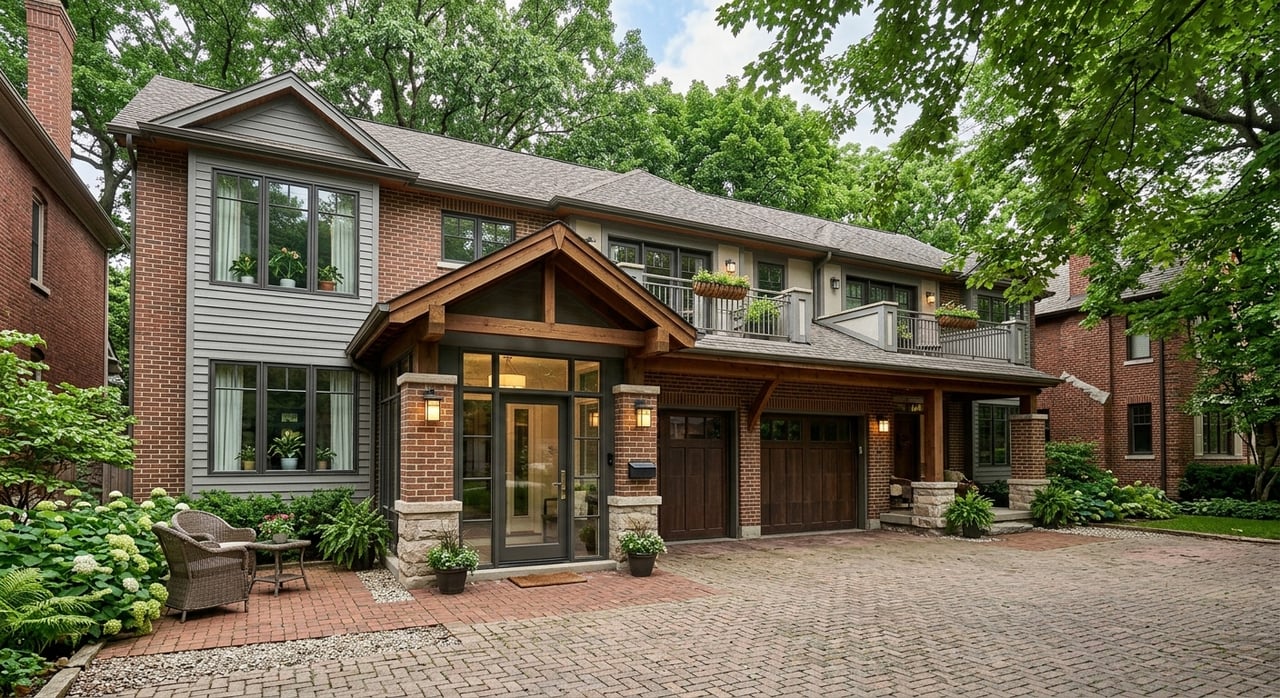
Townhomes near downtown Naperville usually offer a different feel than condos. In local city documents, nearby rowhome and townhome projects are often described as three-story attached homes with private entrances, attached garages, and outdoor areas like balconies or rooftop terraces.
For example, the Benton+Main proposal includes 11 rowhomes planned with attached two-car garages, private balconies, rooftop terraces, and roughly 2,615 to 4,012 square feet of living space. The homeowners association is responsible for exterior maintenance, landscaping, and snow removal.
Another downtown-edge project described by the city includes eight townhomes of about 3,200 to 3,400 square feet. Those homes are also presented as maintenance-free in the sense that the HOA handles exterior upkeep, which is a major draw for buyers who want more space without taking on all the work of a detached house.
Condos vs. townhomes near Declara Heights
If you are choosing between the two, the biggest differences usually come down to layout, ownership, and maintenance expectations.
| Feature | Condos | Townhomes |
|---|---|---|
| Typical layout | Units within a shared building | Attached multi-story homes |
| Entrance style | Often shared building access | Usually private entry |
| Parking | May include garage or common parking | Often attached two-car garage |
| Outdoor space | Balcony or limited outdoor area | Balcony, terrace, or more private outdoor space |
| Maintenance | Shared building systems and common elements | HOA often covers exterior upkeep and landscaping |
In practical terms, a condo may appeal if you want a simpler lock-and-leave setup close to downtown. A townhome may be a better fit if you want more square footage, a private garage, and a layout that feels closer to a single-family home.
The walk-to-downtown advantage
One reason attached housing works so well near Declara Heights is location. Downtown Naperville is organized around the Riverwalk, the Metra station, public parking facilities, and ongoing streetscape and wayfinding improvements.
The Riverwalk itself is 1.75 miles long and is described by the city as the community’s crown jewel. For many buyers, that helps define the appeal of nearby condo and townhome living because daily life can include easy access to restaurants, events, and downtown public spaces.
This is also a practical location for people who want flexibility in how they get around. Based on the city’s transportation and downtown materials, the combination of rail access, public parking, and a concentrated amenity core supports a more walkable, car-light routine than you might expect in a suburban setting.
Parking and commuting in downtown Naperville
Parking is often one of the first questions buyers ask about condos and townhomes. Near Declara Heights, the answer is usually better than expected because downtown Naperville has a broader public parking network than many suburban downtowns.
The city lists four downtown parking facilities and says the downtown system includes about 3,000 spaces in public surface lots and parking decks. The city also has a resident Central Business District permit program for downtown properties.
For commuters, the Naperville Metra station on the BNSF line is at 105 E. 4th Ave. Metra lists 1,652 parking spaces across 31 lots at the station, along with Pace connections on routes 530 and 714.
That does not mean private parking stops mattering. It does mean your private garage or assigned space may not need to carry the full burden of every trip, every guest visit, or every downtown errand.
Ownership structure matters in Illinois
This is one of the most important parts of the decision. In Illinois, a condominium and a non-condo common interest community are not the same thing, even if the homes look similar from the street.
According to Illinois Department of Financial and Professional Regulation guidance, in a condominium you own your individual unit and share ownership of the common elements. In a non-condo common interest community, each member owns the land and residence and pays assessments for shared facilities and restrictions under a different legal structure.
For you as a buyer, this affects more than paperwork. It can shape what the association maintains, how insurance is handled, what parking rights you have, and how future costs are shared.
What HOA and condo documents can tell you
Attached housing often attracts downsizers and buyers who want less day-to-day maintenance. That can be a great fit, but only if you know what the association covers and what it does not.
State guidance says condo associations are required to carry property insurance on common elements and units, liability insurance, and, for associations with six or more units, a fidelity bond. The same guidance explains that common elements may include things like hallways, stairways, entrances, common parking areas, storage areas, roofs, HVAC, outside walks, driveways, and landscaping.
It also notes that limited common elements can include balconies, terraces, patios, and parking spaces. That is important because those areas may feel private in everyday use, but the governing documents determine who maintains them and how costs are handled.
Before you make an offer, review these materials carefully:
- Declaration
- Bylaws
- Budget
- Reserve information
- Parking rules
- Any language related to special assessments
Illinois ombudsperson reporting shows that common association concerns often involve governing documents, assessments, records access, and rules enforcement. In other words, the details in those documents are often where the biggest surprises live.
Who may prefer a condo here
A condo near Declara Heights may make sense if you want to stay close to downtown Naperville and keep home maintenance relatively simple. It can also be a strong option if you value a shared-building setup, lower exterior upkeep, and a location that supports walking to downtown amenities.
This type of home can be especially appealing if you are downsizing from a larger property and want a smoother day-to-day routine. It may also suit buyers who want a second chapter in Naperville without moving far from the downtown core.
Who may prefer a townhome here
A townhome may be the better fit if you want more interior space and a layout that feels more like a traditional house. Private entrances, attached garages, and outdoor features like balconies or rooftop terraces can offer a strong middle ground between condo living and single-family ownership.
For some buyers, that balance is the sweet spot. You get more room and more privacy than many condos offer, while still benefiting from HOA-managed exterior work such as landscaping and snow removal in many downtown-adjacent projects.
A smart way to evaluate attached homes
When you tour condos and townhomes near Declara Heights, try to look past finishes alone. The better question is how the property works for your routine, your budget, and your comfort with shared rules and shared costs.
A clear review process can help:
- Confirm the ownership structure.
- Ask what the monthly assessment covers.
- Review parking, guest parking, and storage details.
- Check for reserve strength and any special assessment history or language.
- Compare walkability and commute convenience with the layout you want.
That kind of detail-first approach matters in downtown-adjacent Naperville. Small differences in documents, parking, and maintenance obligations can have a big impact on how easy the home feels once you move in.
If you are weighing condos or townhomes near Declara Heights, the right answer usually comes from matching the property to your next chapter. A relationship-driven team with local experience can help you sort through the details, compare options clearly, and move forward with confidence. When you’re ready, connect with Bill White Homes for thoughtful guidance on Naperville attached-home living.
FAQs
What kind of area is Declara Heights in Naperville?
- Declara Heights is a historic 1922 subdivision in a downtown-adjacent part of Naperville, not a large planned condo district.
What do condos near Declara Heights usually offer?
- Nearby downtown Naperville condos may offer features such as shared-building living, balconies, enclosed or common parking, and close access to the Riverwalk and downtown amenities.
What do townhomes near Declara Heights usually offer?
- Nearby townhomes and rowhomes are often multi-story attached homes with private entrances, attached two-car garages, and outdoor spaces like balconies or rooftop terraces.
How is condo ownership different from townhome ownership in Illinois?
- In Illinois, condo owners own their unit and share ownership of common elements, while owners in a non-condo common interest community own the land and residence and pay assessments for shared facilities under a different legal structure.
What documents should you review before buying a condo or townhome in Naperville?
- You should review the declaration, bylaws, budget, reserve information, parking rules, and any terms related to special assessments before making an offer.
Why do parking and commuting matter for attached homes near downtown Naperville?
- Downtown Naperville includes public parking facilities, a resident permit program for downtown properties, and access to the Naperville Metra station, which can make attached-home living more flexible for daily routines and commuting.